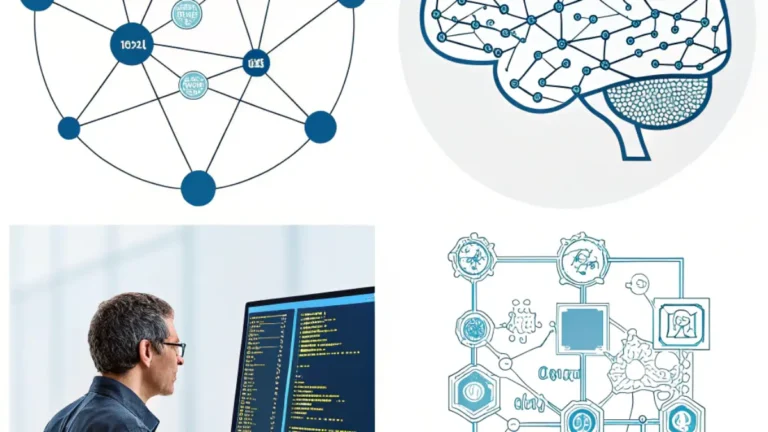
SOA OS23 refers either to an Italian certification (category OS 23) needed for demolition work in public construction tenders, or to a modern software architecture standard evolving from traditional SO A.
In 2025, SO A OS 23 has become a term with two distinct but equally important usages. In Italy’s public works system, SO A OS23 is the specialist certification category for demolition works—ensuring companies meet technical, financial, safety, and environmental criteria to bid in public tenders. In technology, SO A OS 23 describes a modern Service-Oriented Architecture standard (or Operating Standard 2023) that emphasizes modularity, microservices, API-driven design, cloud readiness, real-time monitoring, and interoperability. Understanding both meanings is essential depending on whether the context is construction regulation or software systems.
Understanding the Keyword: What is SOA OS23?
The term SO A O S23 has rapidly emerged in digital and academic conversations, particularly among tech professionals, analysts, and system developers. It is commonly associated with Service-Oriented Architecture (S OA ) innovations in its 2023 iteration, also tagged as O S23—a reference to a version update, open system specification, or operational standard. As industries move forward with automation and integration at scale, understanding SOA OS 23 becomes essential for businesses and tech engineers striving to build resilient, agile, and interoperable systems. This article offers an exhaustive overview of SOA O S23, its applications, implications, technical frameworks, and forward trajectory.
The Evolution of SO A into SOA OS23
The concept of Service-Oriented Architecture (SOA) was first introduced to allow diverse applications to communicate and perform functions across different platforms. With time, SOA has evolved from basic interoperability to more sophisticated integrations, including microservices, cloud-native architecture, and APIs. The OS23 update signals a major leap in how service architectures function in modern, distributed environments.
SO A O S23 integrates cutting-edge principles of digital transformation:
- Cloud-native orchestration
- Enhanced data governance layers
- AI-driven service mapping
- Improved security models for distributed nodes
- Flexible container support
With these, SOA O S23 pushes past traditional constraints, ensuring organizations can deploy services seamlessly across hybrid and multi-cloud environments.
Key Features That Define SOA OS23

Enhanced Modularity and Scalability
SOA OS 23 emphasizes microservice-level modularity, where individual components are decoupled for independent scalability and management. This drastically improves fault tolerance and eases CI/CD processes.
AI-Integrated Service Mapping
Artificial intelligence now plays a core role in SOA OS 23—from mapping service dependencies to predicting performance bottlenecks. With AI, the system gains foresight and adaptability, enhancing efficiency.
Security Across Open Systems
With a focus on Zero Trust Architecture, SOA OS 23 embeds security into every layer—data, identity, service endpoint—ensuring organizations adhere to global compliance standards.
Cross-Platform Interoperability
Gone are the days of OS-specific constraints. SOA OS 23 ensures services run on Linux, Windows, MacOS, and containerized environments with equal efficiency.
Decentralized Service Governance
A decentralized model in SOA OS23 allows organizations to govern and monitor service access, SLA adherence, and policy enforcement through blockchain-based registries.
Technical Architecture of SOA OS23
High-Level Overview
| Component | Description |
| Service Bus | Facilitates communication across microservices and legacy systems. |
| API Gateway | Ensures authentication, rate-limiting, and routing across services. |
| Data Layer | Manages real-time and batch data flows using ETL/ELT pipelines. |
| AI Engine | Predictive monitoring, anomaly detection, and optimization routines. |
| Governance Console | Admin interface for compliance, audit, and orchestration. |
Component Interlinking
Each module within SOA OS23 is linked through secure API connectors, built on OpenAPI 3.1 and RESTful services. The backend supports GraphQL for flexible client queries and gRPC for high-speed binary communication.
- Also Read This: SOA OS23: A Complete Informational Insight for 2025
Real-World Use Cases and Applications
1. Healthcare Systems
In complex environments like hospital networks, SOA OS23 enables EHR integration, real-time diagnostic APIs, and appointment scheduling across multiple platforms.
2. Banking and Financial Services
Financial institutions benefit from SOA OS23 through decentralized ledger tech for transaction validation and AI-enhanced fraud detection modules.
3. Smart Cities and IoT
The operating standard empowers municipalities to integrate transportation, utilities, and citizen services with smart device ecosystems.
4. E-commerce and Logistics
From inventory management to customer order tracking, SOA OS 23 simplifies cross-border logistics, supplier onboarding, and dynamic pricing engines.
5. Education Technology
Universities now deploy SOA OS 23 for virtual labs, AI-tutoring interfaces, and real-time student assessment dashboards.
SOA O S23 vs Previous Versions
| Feature | SOA 2020 | SOA 2021 | SOA OS23 |
| Modularity | Moderate | Improved | Extensive |
| AI Integration | Minimal | Experimental | Core |
| Security | Endpoint-based | Tokenized | Zero Trust |
| Interoperability | Platform limited | Container support | Universal |
| Governance | Manual | Partial Automation | Full Decentralization |
The leap in features clearly defines why SOA OS23 is a transformational shift, not just an upgrade.
Migration Strategies for Enterprises
Migrating to SOA OS23 from legacy SOA setups requires a well-planned, phased approach. Key steps include:
- Discovery Phase: Identify critical services and their dependencies.
- Containerization: Shift to Docker/Kubernetes frameworks.
- Security Overhaul: Implement role-based access controls and end-to-end encryption.
- Testing: Use chaos engineering and integration tests for validation.
- Monitoring: Deploy telemetry systems for real-time insights.
Challenges in SO A OS 23 Adoption
While powerful, SOA OS 23 is not without its hurdles:
- Complex Skill Requirements: Teams must upskill in AI, cloud, and blockchain frameworks.
- High Initial Investment: Infrastructure modernization and licensing costs can be steep.
- Data Compliance Risks: Cross-border deployments must heed GDPR, HIPAA, etc.
- Integration with Legacy Systems: Bridging outdated software still poses technical debts.
SOA OS23 in the DevOps Lifecycle
SOA OS 23 integrates beautifully into DevOps pipelines:
- Continuous Integration: Source code commits trigger service builds.
- Automated Testing: Container-level validation ensures fault detection.
- Continuous Deployment: Canary releases and blue-green deployments reduce risk.
- Observability: Logs, metrics, and traces are centralized for instant alerting.
SOA OS 23: Industry Recognition and Certifications
Several tech authorities and industry forums now recognize SOA OS 23:
- OpenGroup has ratified its specs under the OSAF compliance framework.
- ISO/IEC 30107-3:2023 compliance ensures its security protocols are enterprise-ready.
- AWS & Azure both list SOA OS 23 as a certified standard for their enterprise integrations.
Expert Recommendations
- Gartner calls SOA OS23 “the most modular and secure SOA iteration ever released.”
- McKinsey Digital reports that companies adopting OS23 see 38% faster time-to-market.
- Forrester highlights improved TCO (Total Cost of Ownership) and ROI within the first 18 months of deployment.
Future Trends of SOA OS 23
Looking ahead, SOA OS23 will evolve into:
- Self-healing Services with autonomous error resolution.
- Quantum-Ready APIs for ultra-high-speed computations.
- Fully Autonomous Governance driven by smart contracts and DAOs.
How to Get Started with SOA OS 23
To begin integrating SOA O S23:
- Engage a certified SOA OS 23 consultant.
- Evaluate existing infrastructure readiness.
- Set up a sandbox environment for pilot testing.
- Secure organizational buy-in through ROI demonstrations.
- Build cross-functional teams to champion the migration.
SOA OS23 and the Open Source Movement
Open-source communities are increasingly adopting SOA OS23 through frameworks like:
- Apache Camel OS23 Extensions
- Kubernetes-native SOA Configurators
- Terraform-based Deployment Scripts
This ensures greater transparency, faster innovation, and community support.
Conclusion: Why SOA OS23 is the Future of Digital Infrastructure
In a world driven by rapid change, SOA OS23 stands tall as the most comprehensive, secure, and future-ready service architecture standard. With its unmatched scalability, AI integration, and decentralized governance, businesses can now innovate with confidence. The global shift toward interoperability and modularity is no longer optional—it’s a strategic imperative, and SOA OS23 is the clear path forward.
FAQs
Q1: What is SOA OS23 in Italy’s construction/public works sector?
A1: In that context, SOA OS23 is the SOA (Società Organismo di Attestazione) certification category for demolition works. It confirms that a contractor meets the technical, financial, and compliance requirements to participate in public demolition tenders.
Q2: What does SOA OS23 mean in the technology industry?
A2: In tech, SOA OS23 refers to a modern Service-Oriented Architecture standard. It enhances traditional SOA with cloud-native design, microservices, API communication, and scalable modular systems.
Q3: Why does SOA OS23 have two meanings?
A3: The abbreviation is used in very different contexts—construction regulation in Italy and software system design in technology. This dual usage is what makes SOA OS23 unique and sometimes confusing.
Q4: What are the requirements for SOA OS23 certification in construction?
A4: To obtain the certification, companies must demonstrate technical expertise in demolition works, financial stability, environmental and safety compliance, and provide legal/tax documentation through an authorized SOA body.
Q5: What are the benefits of applying SOA OS23 in software architecture?
A5: Using this modern framework enables modular deployment, system interoperability, cloud readiness, improved monitoring, and greater scalability—key for future-proofing enterprise systems.
For More Info: londontechinsights.co.uk
About the Author