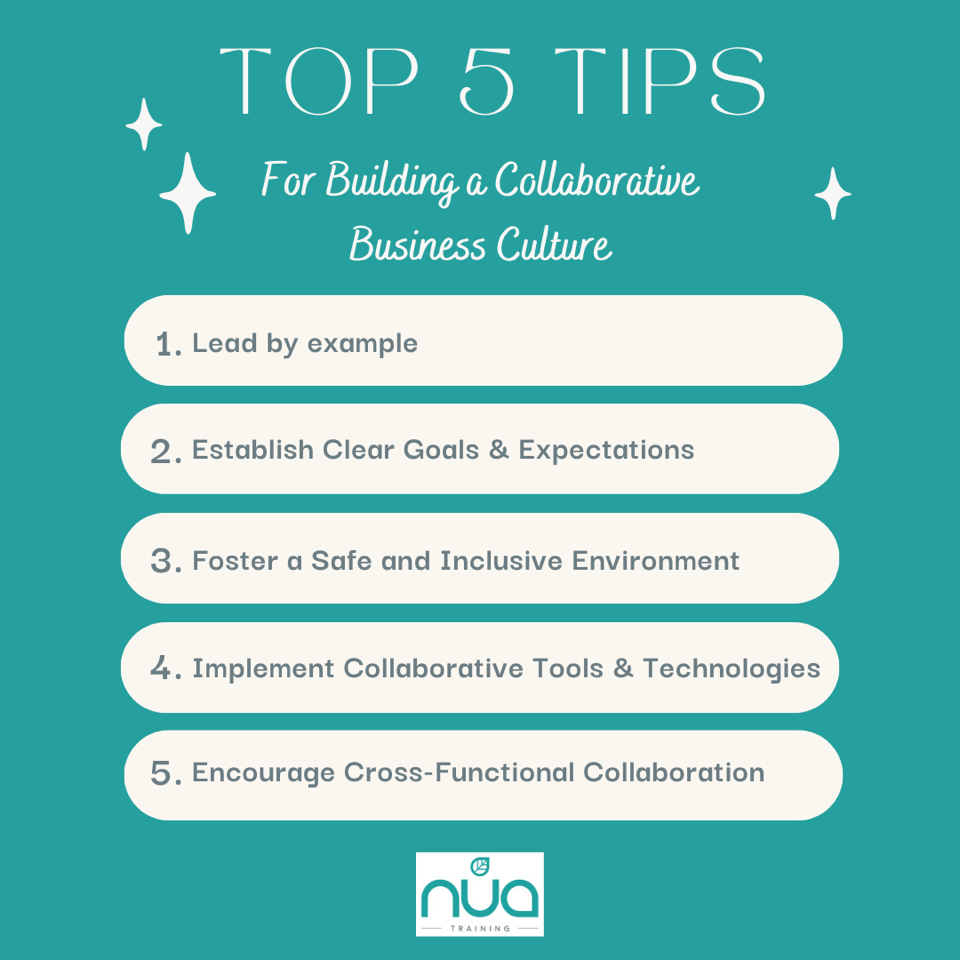
- Lead by Example
Building a collaborative culture starts at the top. Leaders across the whole business should model collaborative behaviours and actively demonstrate their commitment to collaboration. They can do this by encouraging open communication, active listening, and inclusive decision-making. When employees see their leader’s embracing collaboration, they are more likely to follow suit. - Establish Clear Goals and Expectations
Clearly define the purpose, goals, and expectations of collaboration within your organisation. Ensure that employees understand how collaboration aligns with the overall vision and mission of the business. When everyone shares a common understanding of the desired outcomes, it becomes much easier to work collaboratively towards achieving them. - Foster a Safe and Inclusive Environment
Create a safe and inclusive environment where all team members feel heard and comfortable expressing their ideas, opinions, and concerns. Encourage diversity of thought and respect for different perspectives. Emphasise the value of each individual’s contributions, regardless of their role or hierarchy within the organisation. Promote psychological safety, where people feel secure enough to take risks and share their thoughts without fear of judgement or retribution. - Implement Collaborative Tools and Technologies
In the hybrid world of work we are now operating in, technology is a key enabler in facilitating collaboration and knowledge sharing within your organisation. Visual collaboration platforms, project management software, and document sharing systems all enable seamless communication, real-time collaboration, and access to information, regardless of physical location. Having run remote brainstorming sessions using visual collaboration platforms, it’s surprising how effective the outcomes can be, if it’s not possible for everyone to be in the same room. - Encourage Cross-Functional Collaboration
To encourage cross-functional collaboration, you need to break down silos. Data Teams often sit in silos within an organisation, in isolation, focusing on the question they think they’re answering, but unfortunately, it’s not the answer the business needs.
Facilitating opportunities for employees from different departments and teams to work together on projects, initiatives, or problem-solving sessions opens their eyes to different perspectives, enhances the exchange of ideas, promotes a holistic understanding of the business, and improves the overall effectiveness of the decision-making processes.
Also, don’t miss the opportunity to acknowledge and reward collaborative behaviours and achievements. It’s important to celebrate successful collaborative projects and recognise individuals who actively contribute to a collaborative culture. This can be done through public recognition, performance evaluations, or even incorporating collaboration as a key competency in your organisation’s reward and recognition programme. By reinforcing the importance of collaboration, you motivate employees to continue engaging in collaborative efforts.
Embracing collaboration as a core principle empowers employees, enhances organisational agility, and ultimately drives business growth in today’s dynamic and interconnected world, powered by data.
Building a collaborative business culture is a continuous effort that requires commitment and active involvement from leaders and employees alike. By leading by example, establishing clear expectations, creating a safe environment, implementing collaborative tools, and encouraging cross-functional collaboration, businesses can foster a culture that values teamwork, innovation, and collective success.
If you found this article useful, and you’d like to help your best people and teams excel through data leadership coaching, please visit our website NUA Training.